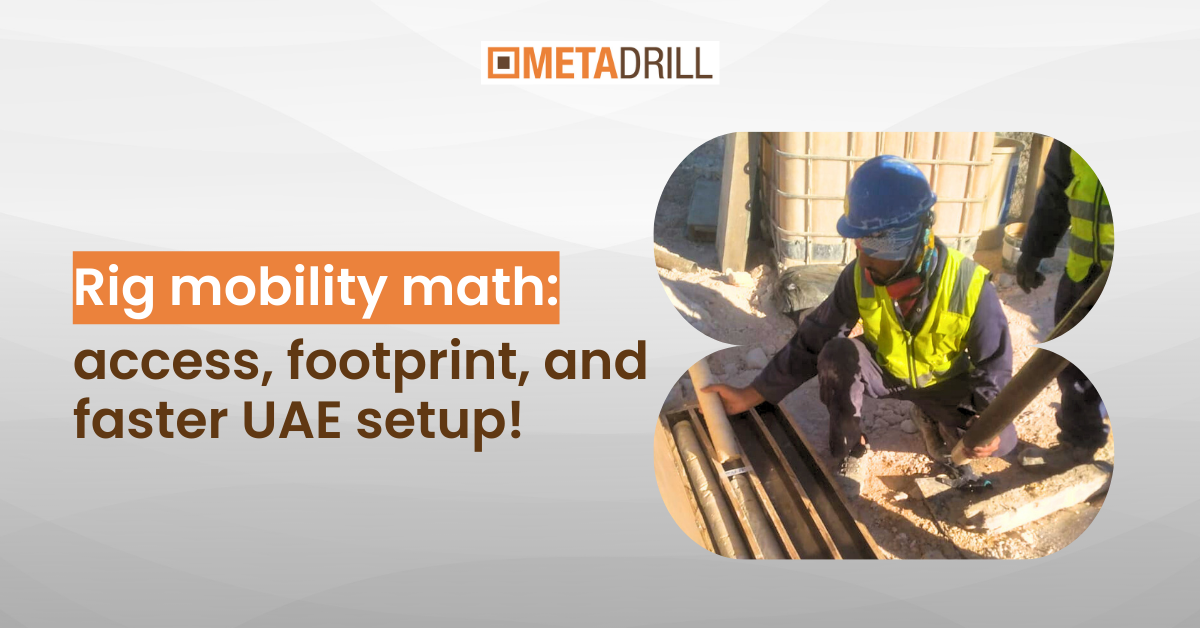
You can have the best crew in the UAE and still lose half a day before the first meter is drilled. Not because anyone is slow, but because the rig cannot get in cleanly, cannot sit safely, or needs too many “small” adjustments once it arrives. That is where rig mobility math matters, and it is exactly why choosing a compact drill rig is often the difference between a smooth setup and a messy one.
Start With Access Math Before You Mobilize a Compact Drill Rig
In the UAE, access is not just “Can the truck reach the site?” It is can the rig reach the exact drilling point without hitting a gate, clipping a kerb, or stopping under low overhead lines.
Here is the practical access checklist you should confirm before dispatch:
Gate width and turning space: Measure the narrowest pinch point, then confirm the turning radius for the carrier and trailer (if any).
Overhead clearance: Look for shade structures, signage, temporary lighting, and building canopies.
Ground conditions on the route: Loose sand, pavers, ramps, and soft shoulders change how safely you can move.
Traffic windows and delivery timing: Some sites restrict heavy movement during peak hours, especially in active commercial areas.
When access is tight, a drill rig for small spaces is not a “nice to have.” It is risk control. Fewer reversals, fewer spotters, fewer surprises.
Footprint Math: What “Fits” Is Not the Same as What “Works”
A rig can “fit” through an opening but still fails at the drilling point because it cannot operate properly once positioned. Footprint math is about the working envelope, not just the base size.
Confirm these on the drilling location:
Working footprint: Space for the rig, rod handling, tooling, spoil bins, and safe crew movement.
Mast raises and service clearance: Enough room to raise the mast and access service points without pushing the rig into unsafe angles.
Ground bearing and stability: uneven slabs, compacted fill, or soft sand can create tilt issues that slow alignment and increase wear.
This is where geotechnical drilling equipment planning matters. If your support gear is scattered, oversized, or arriving late, your “small” setup becomes a multi-step staging exercise.
Subheading: Drill Rig for Small Spaces Means Smarter Layout, Not Smaller Ambition
A tight site does not reduce your technical requirements. You still need clean alignment, stable rotation, safe rod handling, and consistent sampling. A true drill rig for small spaces helps you protect quality while reducing the site space you consume.
Faster UAE Setup with Modern Efficient Geotechnical Rigs
Speed is rarely about rushing. It is about removing friction points that repeat every job. Modern efficient geotechnical rigs typically help by simplifying transport, reducing manual handling, and standardizing routines.
To make setup faster on UAE sites, prep these in advance:
Pre-mobilization pack list: rods, bits, sampling tools, consumables, and safety gear checked as one kit
Tooling compatibility: confirm thread types, rod lengths, and chuck compatibility before arrival
Site readiness: confirm access approval, laydown area, and power/water needs if required
One-page setup sequence: a simple step orders the whole crew follows, every time
When your compact drill rig arrives with the right kit and a repeatable setup routine, you reduce “search time,” avoid rework, and start drilling sooner without compromising safety.
Quick Field Rule: Mobility Math in One Sentence
If the rig can enter with margin, operate with clearance, and stage geotechnical drilling equipment without congestion, setup becomes predictable.
You can also check: MD1000N Deep Coring: Plan Runs Protect Recovery, Hit Targets
Conclusion:
Rig mobility is not a theory. It is measurable: access width, overhead clearance, turning space, and operational footprint. Get those numbers right, and your compact drill rig becomes a real advantage for faster UAE setup, especially when you are working on tight plots and active developments.
If you want, share your typical site type (villa plot, roadside, industrial yard), and we will map a simple access-and-footprint checklist you can reuse on every job.
Question to the public:
That is where rig mobility math matters, and it is exactly why choosing a compact drill rig is often the difference between a smooth setup and a messy one.