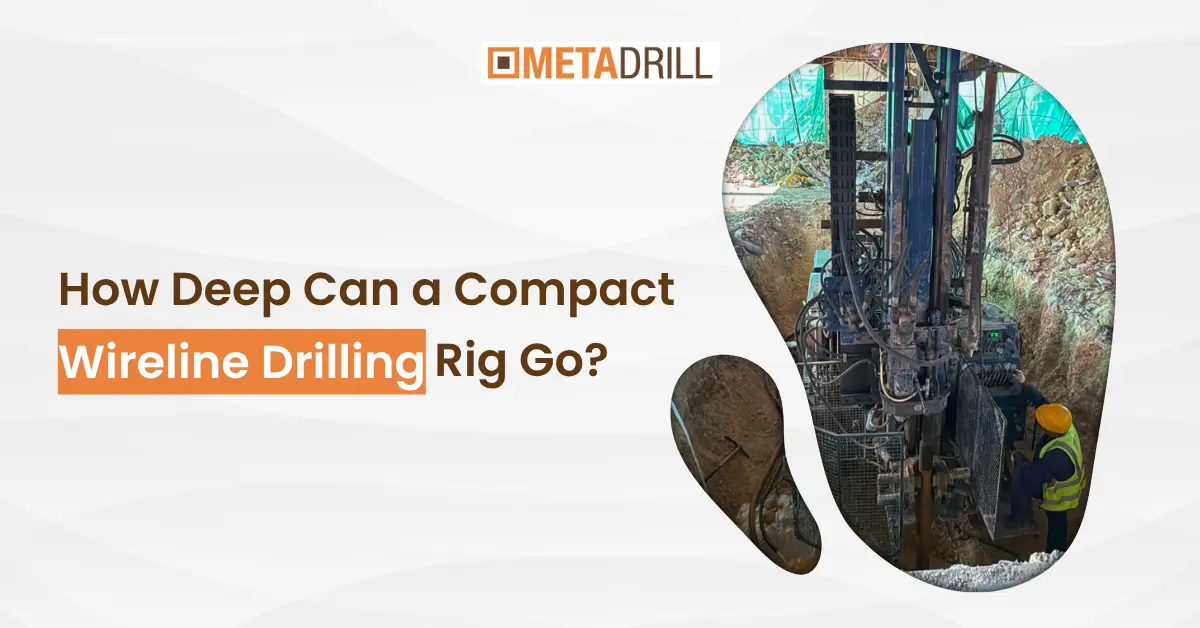
This question comes up a lot on drilling sites. “How deep can this rig actually go?”
It is a mere question in the beginning. Citizens want a direct answer, perhaps in meters. However, having visited the crews of drilling, you know that nothing is that simple. There is no specific depth limit to a compact wireline drilling rig.
Two rigs which appear nearly identical on the surface may behave quite differently after the drilling has begun. The depth is based on the underground happenings.
The deeper the hole the harder the rock, and the heavier the drill string becomes, the conditions on the ground change. All these begin to influence the distance covered by the rig.
There is also an easy time in most scenarios when a compact rig can drill a few hundred meters. In different cases, the same rig can perform much worse. Conversely, given the correct installation and environment, certain small rigs can go down to nearly 1000 meters. Then, rather than inquiring simply about deepness, it would be more logical to inquire: “Under what conditions can a compact wireline rig reach deeper depths?”
That is exactly what we will break down in this guide.
Typical Depth Range of Compact Wireline Drilling Rigs
When people ask about depth, they usually expect one clear number. In reality, compact wireline rigs don’t work like that, so the answer always depends on how the drilling conditions unfold.
A small size wireline drilling rig in most activities can comfortably work between a range of 200 and 600 meters. Under this limit, the rig is not required to strain much on drilling and crew can keep the pace. Things begin to change as the drilling continues deeper. Drill rods become heavier, the ground resistance accumulates and the machine must work more to keep it going. Thanks to this fact, there are still rigs, which reach 700 to 800 meters, provided the ground remains stable and the drilling process is handled by the crew very carefully. In some cases depth may even be more. Well-developed compact rigs can occasionally go to near 1000 meters under ideal conditions of drilling, balanced drilling pressure and ground conditions. This, however, does not just occur by default. It happens only when multiple factors align properly.
At this point, it becomes clear that the rig alone does not decide the depth. Several elements start influencing performance as drilling moves deeper.
One of the first things drill rig manufacturers look at is the rod size, since it directly affects how much load the rig has to handle.
When crews use NQ rods, the rig can drill deeper because the rods are lighter
When they switch to HQ rods, the depth reduces slightly because the rods add more weight
When they use PQ rods, the weight increases further, which limits how deep the rig can go
As a result, even a small change in rod size can shift the overall drilling depth.
At the same time, ground conditions continue to influence everything. Soft soil may allow faster penetration at first, but it often creates instability as drill rig parts go deeper. On the other hand, harder formations slow the process but usually support better hole stability.
Because of these changing conditions, two rigs with similar specifications rarely perform the same way on different sites.
That is why experienced drillers avoid giving fixed numbers. Instead, they observe how the rig behaves during drilling and adjust their expectations based on real conditions.
What Actually Limits Drilling Depth in Compact Rigs
Once drilling goes deeper, the real challenge begins. On the surface, the rig may look strong enough, but as the hole extends, several forces start building up at the same time.
Because of this, depth is never controlled by a single factor. Instead, multiple things work together, and each one starts affecting performance step by step.
One of the first limits comes from rod weight.
As drilling goes deeper, more rods get added into the hole. This increases the total weight hanging from the rig. At shallow depths, this does not create much pressure. But as the depth increases, the load becomes heavier, and the rig has to work harder just to rotate and lift the string.
At the same time, torque demand also increases.
The deeper the hole, the more resistance builds between the rods and the ground. The rig must generate enough torque to keep the parts of a drilling rig rotating. If torque drops, rotation slows down, and drilling progress starts to suffer.
Then comes another important factor, which is hole stability.
In some ground conditions, the borehole walls remain strong and stable. In other cases, especially in loose or fractured formations, the walls may start collapsing or squeezing the drill rods.
When this happens, the rods face extra friction. As a result, the rig needs more power to continue drilling, and in some cases, the operation has to stop.
Along with that, drilling fluid performance also plays a role.
Drilling fluid helps remove cuttings and keeps the hole clean. If the fluid does not circulate properly, debris starts building up inside the hole. This increases resistance and slows down the drilling process.
One more aspect that is easily neglected is operator control. A trained drill rig manufacturers is aware of the pressure, rotation speed, and feed rate equilibrium. When these are managed properly, the rig works better and attains much depth. Conversely, inefficient management may decrease the drilling efficiency even on moderate depths. All these factors interact with one another and therefore, depth is an outcome of managing all the factors appropriately while drilling. This is why two similar rigs can perform very differently. One may stop early due to poor conditions or handling, while another may continue deeper under better control.
How to Increase the Depth Capacity of a Compact Wireline Rig
When drilling starts getting deeper, most people think the rig has reached its limit. In reality, many times the problem is not the machine, it’s how the drilling is managed.
Small changes in approach can make a big difference.
1. Choose the Right Rod Size
Depth often depends on how much weight the rig has to handle. As the hole gets deeper, every additional rod adds load to the system, which slowly reduces performance.
Because of this, experienced crews usually prefer NQ rods when they aim for deeper drilling. These rods are lighter, so the rig handles them more easily at greater depths.
At the same time, heavier rods like HQ or PQ provide better core samples, but they increase the load quickly. So crews need to balance between sample quality and depth.
When the goal is depth, lighter rods usually give better results.
2. Maintain Proper Drilling Pressure
Once drilling starts going deeper, pressure control becomes more important than most people expect.
Most operators make heavy hands when the progress is reduced, but in most cases, this only causes more problems than they can address. In the excessive pressure, the drill bit expires too quickly. Simultaneously, the rods begin to gain additional stress, and the whole system begins to be struggling rather than enhancing the performance. Conversely, when the pressure is low, this is a different problem. The bit continues to rotate, however, it is not a good cutter and thus slows down the process of drilling making it slow and ineffective. This is the reason why the appropriate balance must be searched. The old-time drillers tend to operate in a plain manner:
apply steady pressure, not sudden force
increase pressure gradually in hard formations
reduce pressure when the rig shows resistance
avoid forcing the rig when progress slows
This way, the rig keeps working smoothly instead of fighting against the ground.
Over time, proper pressure control helps in two ways. It protects the equipment from unnecessary stress, and at the same time, it allows the rig to reach greater depth without breaking the drilling rhythm.
3. Control Rotation Speed and Torque
As drilling goes deeper, rotation and torque start playing a bigger role. At shallow depth, the rig rotates easily. But as more rods go into the hole, resistance builds up, and the machine needs more control to keep things moving.
If rotation speed is too high, the drill bit may spin without cutting properly. This creates heat, increases wear, and reduces efficiency.
On the other hand, if rotation is too slow, the drilling process becomes weak and inconsistent, especially in harder formations.
This is where torque also comes into play.
The rig needs enough torque to keep the bit turning under load. If torque drops, the rods may start binding, and drilling progress slows down.
Because of this, the operator needs to manage both rotation and torque together.
A practical approach usually looks like this:
keep rotation steady, not aggressive
reduce speed when resistance increases
allow torque to build gradually instead of forcing it
avoid sudden changes in speed during drilling
This balance helps the rig maintain smooth cutting action instead of creating unnecessary stress on the system.
When rotation and torque stay under control, drilling becomes more stable. As a result, the rig performs better at deeper levels without losing efficiency.
4. Keep the Borehole Clean
As drilling goes deeper, keeping the hole clean becomes more important than many people realize. At shallow depths, small amounts of debris may not cause serious issues. But as the hole extends, even a slight buildup inside can start affecting the entire operation.
When the drill bit cuts through the ground, it produces small rock fragments known as cuttings. These cuttings must move out of the hole continuously. If they stay inside, they begin to settle around the drill string and create resistance.
This is where drilling fluid plays a major role.
The fluid moves down through the rods and then flows back up, carrying cuttings to the surface. This circulation keeps the borehole clear and allows drilling to continue smoothly.
If this flow weakens or slows down, problems start building step by step.
cuttings begin to settle at the bottom
debris starts blocking the drilling path
rods face extra friction while rotating
the rig needs more power to continue
In worse cases, the drill string can even get stuck inside the hole, which stops the operation completely.
Because of this, experienced crews pay close attention to hole cleaning. They adjust fluid flow, monitor circulation, and make sure cuttings keep moving out without interruption.
A simple approach usually works best:
maintain steady fluid circulation at all times
check that cuttings are reaching the surface properly
avoid slowing down the flushing system during drilling
increase flow when drilling deeper sections
When the borehole stays clean, the rig operates with less resistance. As a result, drilling becomes smoother, and the machine can reach greater depth without unnecessary strain.
5. Use Experienced Operator Techniques
As drilling goes deeper, the machine alone cannot carry the job. At that stage, the operator starts making the real difference.
Two rigs with the same setup can perform very differently, and most of the time, the reason is how the operator handles the drilling.
An experienced driller does not rely only on gauges. They read the behavior of the rig while drilling. Small changes in sound, vibration, or resistance tell them what is happening underground.
Instead of forcing the machine, they adjust step by step.
A skilled operator usually focuses on a few key things:
listens to the rig and notices unusual vibration
adjusts pressure slowly instead of pushing suddenly
controls rotation based on ground response
pauses drilling when resistance increases too much
avoids rushing when drilling becomes difficult
Because of this approach, the rig stays stable even at deeper levels.
Less experienced operators often make one common mistake. When drilling slows down, they try to force progress. This creates more load on the system and reduces depth capacity instead of improving it.
On the other hand, experienced drillers stay patient. They allow the machine to work with the ground instead of against it.
Over time, this controlled approach reduces equipment stress, improves drilling efficiency, and helps the rig reach deeper depths safely.
That is why on many sites, people say:
“The rig matters, but the driller matters more.”
You can also check: Essential Drill Rig Spare Parts You Must Keep In Stock
Final Thoughts
By now, one thing should be clear.
A compact wireline drilling rig does not have a fixed depth limit. You won’t find one number that fits every project, and if someone gives you one, they are simplifying a much more complex reality.
Depth depends on how everything comes together on site.
If the ground stays stable, the rods remain manageable, and the drilling process stays controlled, a compact rig can go much deeper than expected. On the other hand, if conditions turn difficult or the operation lacks control, even a capable rig may struggle early.
So instead of asking, “How deep can this rig go?”, a better question is:
“Is this setup prepared to reach the depth we need?”
That’s where smart decisions come in.
Before choosing a compact wireline rig, you should think about:
the type of ground you will drill into
the required drilling depth for your project
the rod size you plan to use
the experience level of your drilling crew
how well you can manage pressure, rotation, and hole cleaning
When you have the middle-depths of your project, and require mobility, flexibility and an efficient setup, a compact rig can happen to make ideal sense. But in case your project requires a high level of depth or acquires extremely demanding ground situations, then you should consider acquiring a stronger system rather than using a compact one exclusively. At the close of the day, the optimum results are achieved through the appropriate rig being used with the appropriate conditions as well as the appropriate rig manufacturers. Success in drilling does not rely on the machine itself. It is based on the successfulness of all working together.
Question to the public:
Learn how deep a compact wireline drilling rig can go. Understand real depth limits, NQ vs HQ, and key factors that affect drilling performance.